On-Course Development
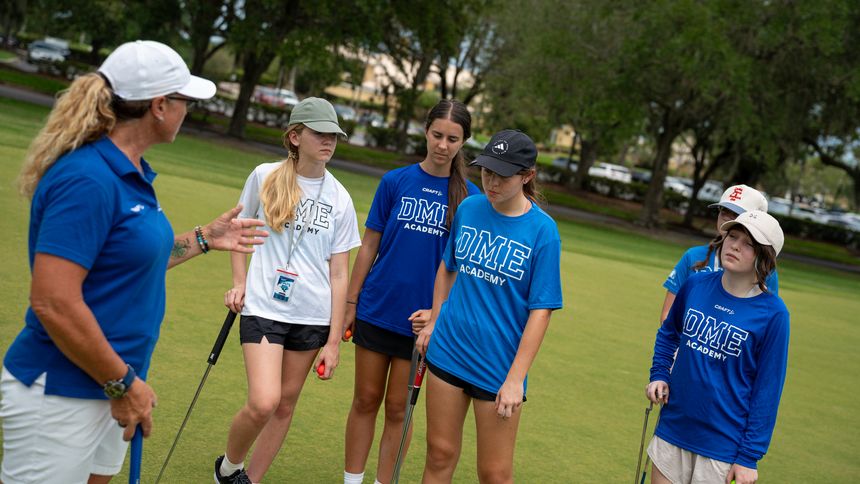
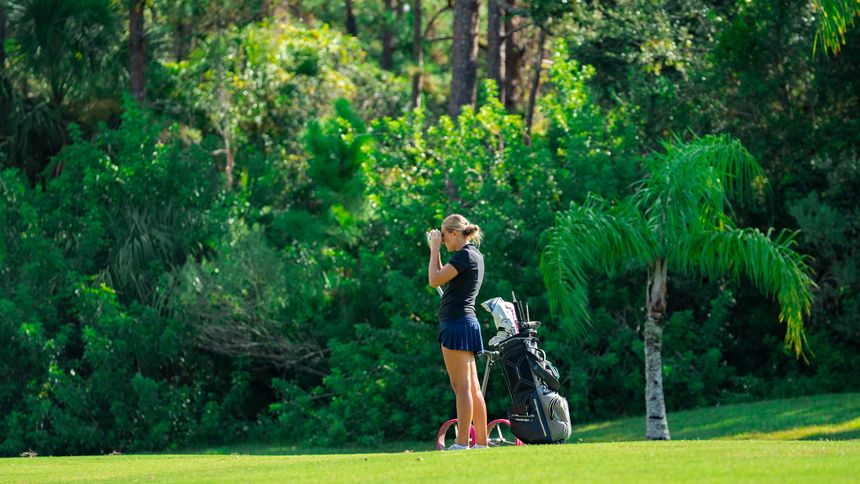
Student-athletes spend significant time learning how to play and score — reading the hole, choosing the shot, and living with the decision.
Boarding · Day · Post-Grad
Train to Play. Play to Develop. Prepare to Compete.
A competition-driven development program that puts on-course performance at the center of everything — because the scorecard is the only place the work counts.
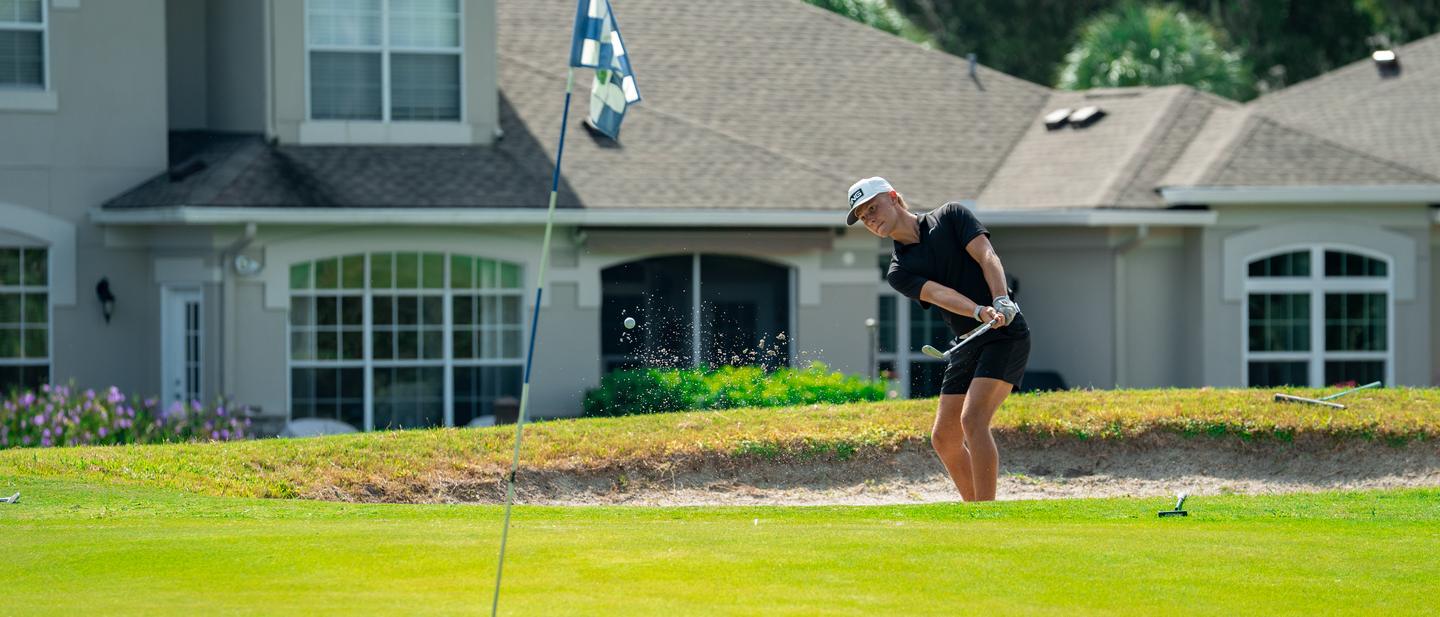
On-course performance sits at the center of player development. Technical instruction matters, but only once it survives contact with a real round.
DME Academy Golf is a high-performance program designed to help student-athletes become complete golfers and prepare for the next level of competition. The goal is transfer: taking what a player builds in practice and applying it where it actually counts — on the course and in tournament competition.
Players develop through on-course training, purposeful skill development, competitive practice, golf-specific fitness, functional movement, mental performance, technology and tournament experience — inside a full academic day.
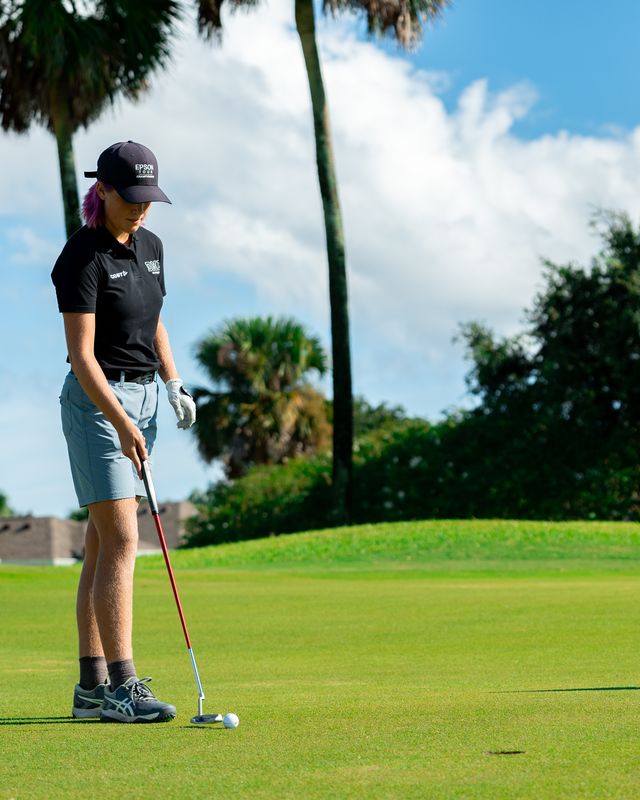
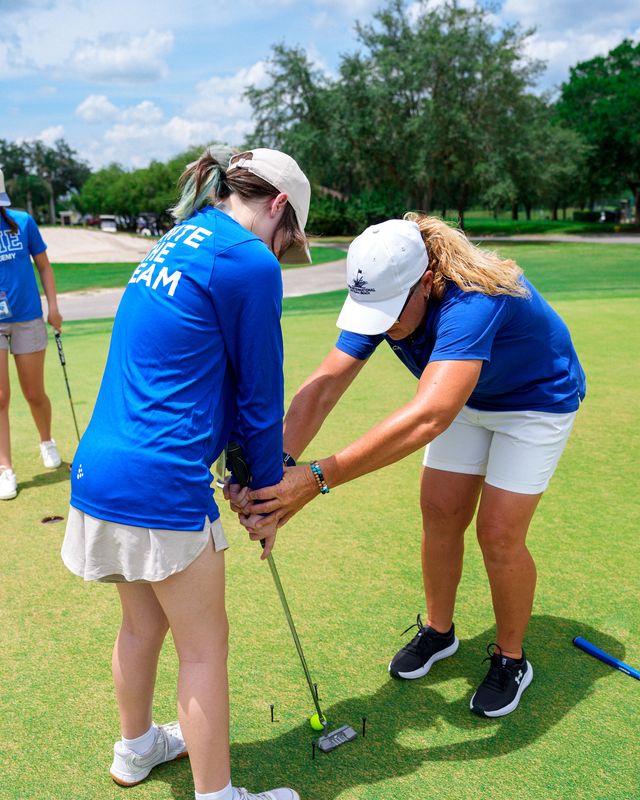
Five connected areas of work. Athletes learn to think, move, prepare and compete like players who are ready for the next level.
Student-athletes spend significant time learning how to play and score — reading the hole, choosing the shot, and living with the decision.
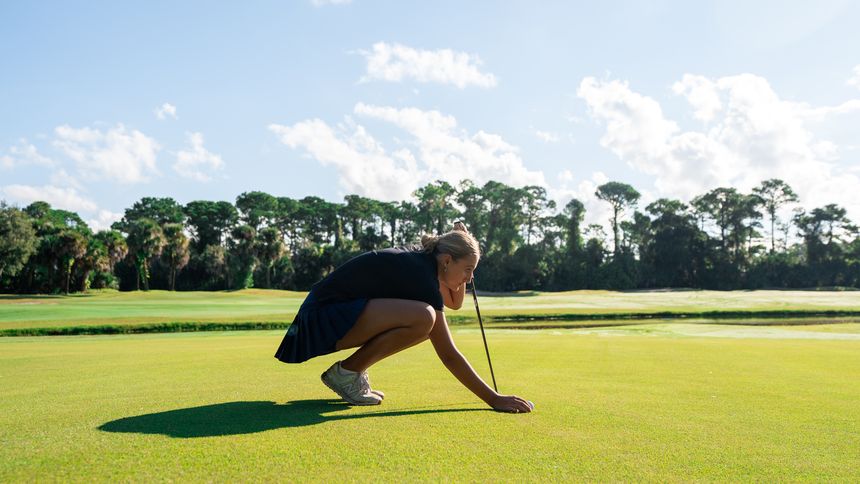
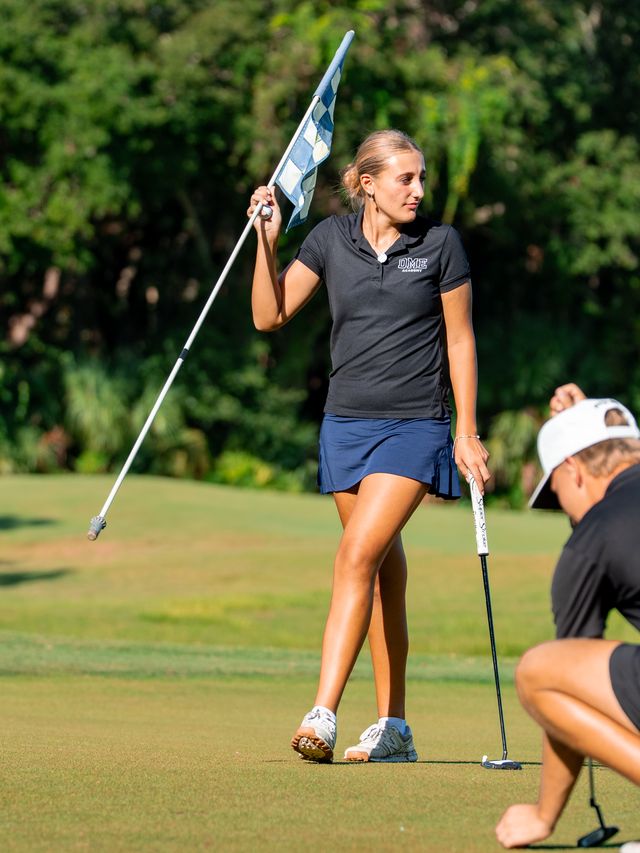
Practice is built to prepare golfers for real competition — so that performing with something at stake stops being unfamiliar.
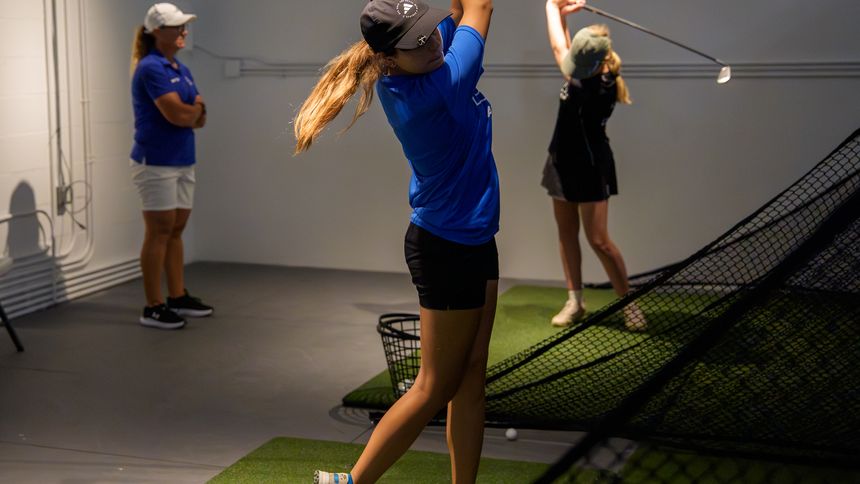
Full swing, short game, putting and distance control — assigned against each player's own performance needs rather than a shared template.
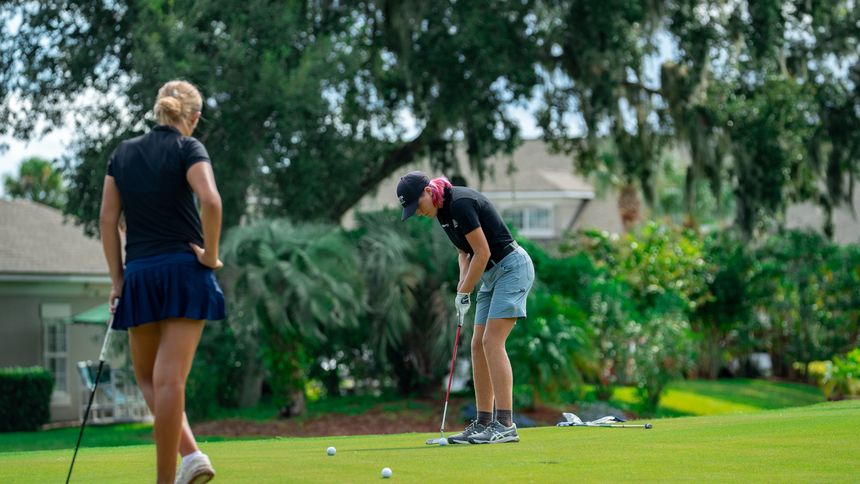
Carried through the whole program rather than bolted on — the habits that hold up when a round stops going to plan.
Competition isn't the reward at the end of the work — it's the input that shapes the next block of it.
06
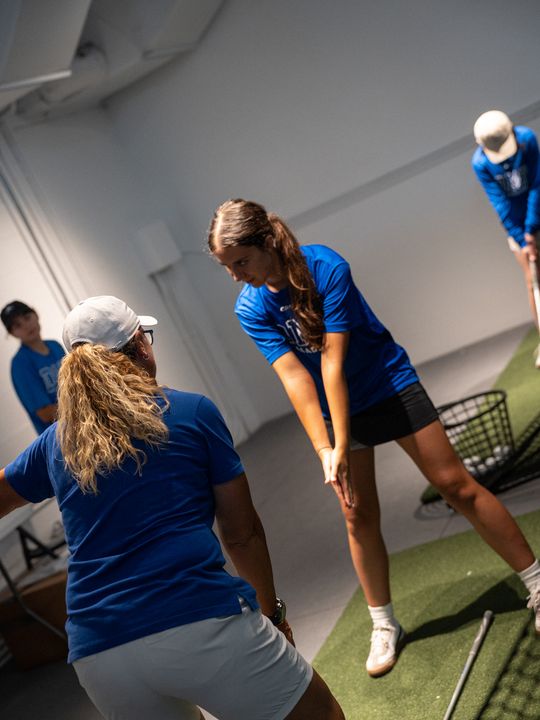
Golfers are trained as athletes. Mobility and functional movement, strength and stability, rotational power, speed development, injury prevention, recovery, nutrition and physical readiness — programmed for the golf swing, not borrowed from another sport.
Competition becomes information. Coaches use what actually happened on the course to shape purposeful training, then send the athlete back into competition to test whether it held.
Perform in real competitive environments and generate meaningful performance data.
Review decisions, scoring, shot patterns, physical readiness and mental performance.
Build the next block around what the player's own results say they need.
Transfer technical and strategic work back onto the golf course.
Test the progress under pressure — and start the loop over.
The loop never closes
Every DME golfer develops through an individualized plan shaped by where they are, how they're performing and where they want to go. Six inputs build it:

Competition is a major part of the DME Golf experience. Athletes learn how to prepare professionally before the first tee shot — and how to evaluate honestly after the final putt.
DME builds the physical and mental tools that let a golfer repeat their best, recover between rounds, and compete with confidence across a full season.
Physical
Golf-specific performance work develops mobility, functional movement, strength, stability, rotational power, speed, injury prevention and physical readiness.
Mental
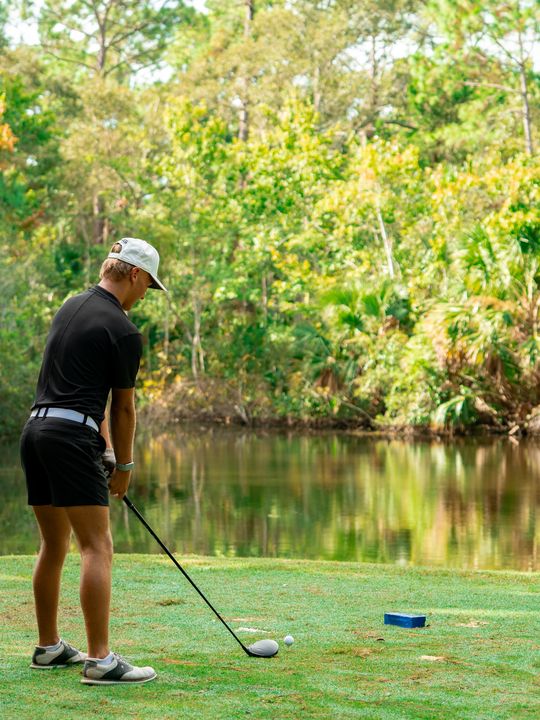
Confidence, focus, emotional control, resilience, breathing technique and competitive routines — built in practice so they're available under pressure.
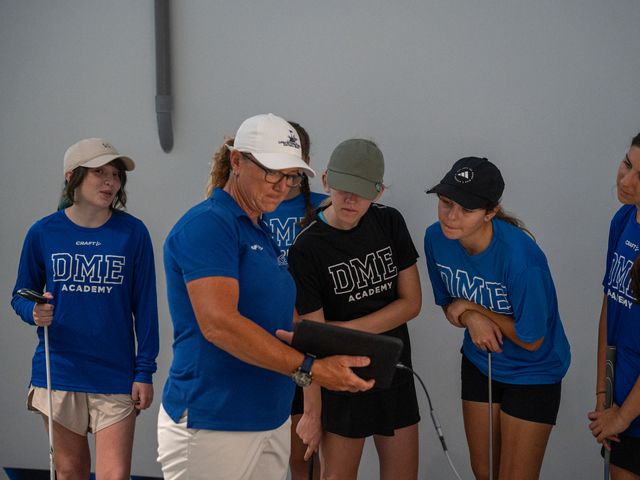
Technology supports the coaching process — it doesn't replace it. DME uses performance tools and statistics to find patterns, measure progress and point training where it will make the biggest difference.
Success here is broader than a prettier swing. The program is built to produce golfers who decide better, perform more consistently, and arrive at the next level ready for it.
01
Better execution translated into actual scoring performance, not just range results.
02
Smarter course management, target selection and scoring strategy under real conditions.
03
Improved preparation and performance when something is genuinely at stake.
04
More efficient movement, more power, better durability and faster recovery.
05
Greater focus, more resilience, and real trust in a routine that has been tested.
06
A stronger overall student-athlete profile and a clearer, better-fitting next step.
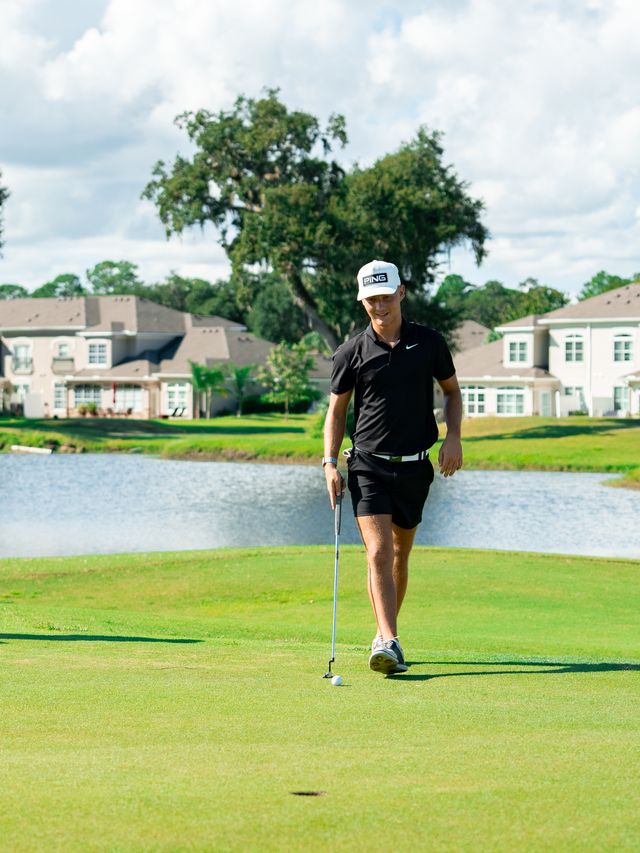
The ultimate goal is to help each golfer find the college program that genuinely fits their game, their academics and their long-term goals — not simply the first one that calls.
DME connects athletic development to the wider student-athlete experience, so players arrive prepared for the expectations of college competition, college academics and the personal responsibility that comes with both.
Five routes into the same program. Every one of them starts with the same conversation.
Full Enrollment
The complete academic, athletic and residential DME experience.
Learn more →Full Enrollment
The full DME program for local student-athletes who head home each night.
Learn more →Next-Step Year
One more year of development, academics and competitive preparation before college.
Learn more →Intensive
A multi-week training experience built around purposeful player development.
Learn more →Short-Term
A residential or commuter golf development week.
Learn more →
Find out what your game becomes in an environment built for student-athletes who want more from themselves — on the course and well beyond it.